The golden era of Indian stock market: Is it over or yet to come?
Dec 23, 2022 - Anurag Singh
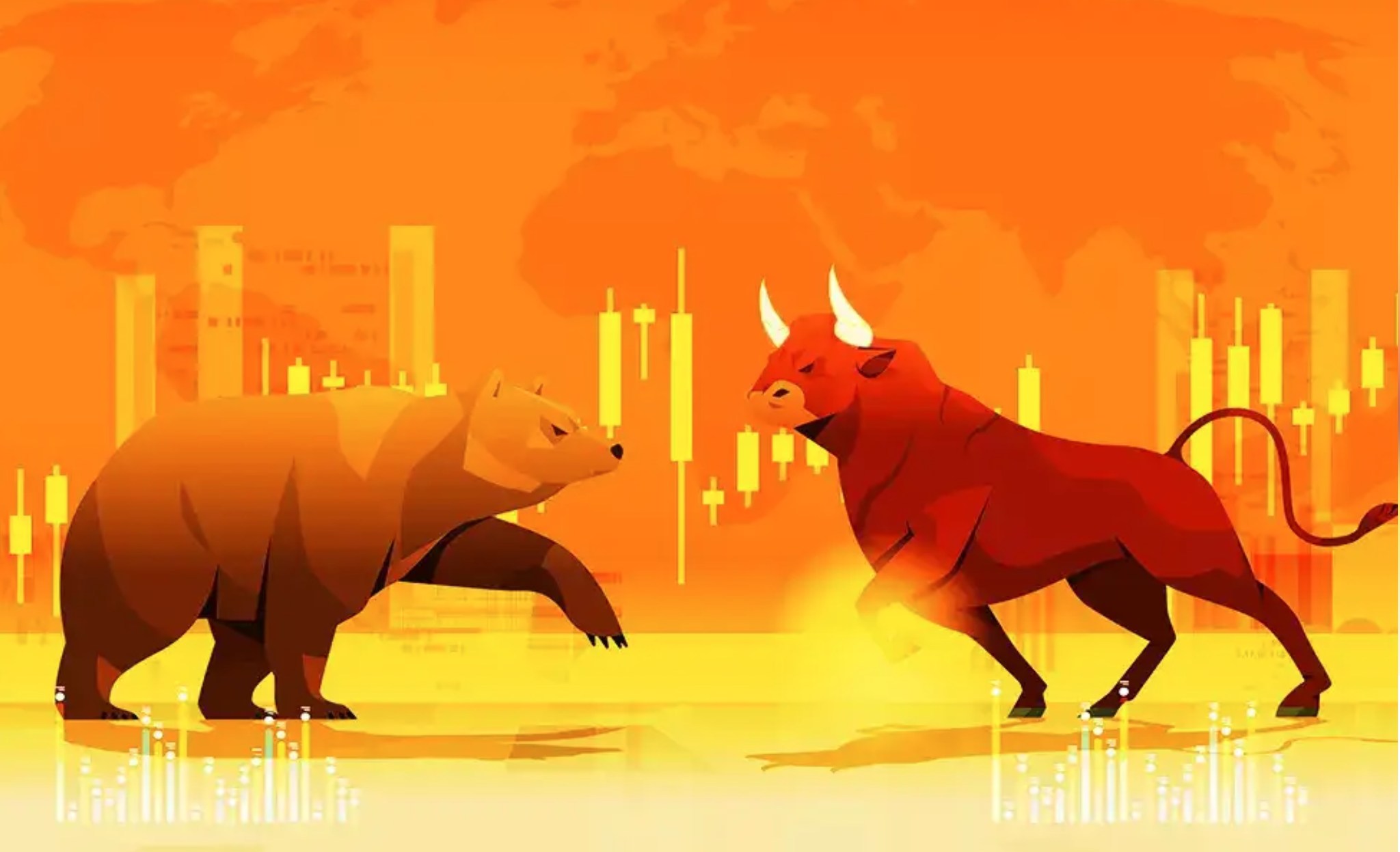
The best decade to own stocks with 35% CAGR returns ended in 1991, says data. However, this is not unusual as most easy pickings on valuation are made at early stages. The next best decade was 2001-2011, yielding 20% CAGR but this was accompanied with many years of double-digit inflation. Can India attain 8%-plus growth rates again?
We have all heard this story before — had you invested in the Sensex in 1979, you would have got 600x returns (CAGR of ~17%). The math is simple since Sensex started at 100 and is now hovering at 62,000 plus.
If only making money was that easy.
While there is nothing wrong with the numbers, the argument is not that strong once we delve into the details. But then, which were the best decades for Indian markets in terms of returns?
I’ll make an effort to validate if there is more to this story than meets the eye. And there is. As most fund houses like to present returns since inception, it is important to see the Indian stock market as four distinct phases. Each decade can be seen through the lens of inflation, interest rates, reforms, corporate profits, and market returns.
The bull vs. bear battle: 1979 - 1991
You must know that the Sensex actually came into existence in 1986 at a level of 700, but it was back calculated to 1979 at 100 points as the base. So, the BSE index had already made an impressive 7x returns the year it was launched. Despite the crash of 1987 that followed in the US market, Sensex saw its first major bull run by 1991, now infamously known as the Harshad Mehta market frenzy.
The Sensex ended at 2,000 level by the end of 1991, which implies a CAGR of 35% (20x returns) since 1979. This 35% CAGR between 1979 and 1991 is the kind of performance you may never see again. Hence, all perpetually bullish reasoning starts from 1979 and not after 1991. But this phenomenal start of Indian stocks was about to hit a bump.
Liberalisation, privatisation, globalisation and Y2K: 1991 - 2001
The new era started with much promise post-liberalisation in 1991, propelled by the Narsimha Rao-Manmohan Singh duo at the helm. It promised to break the 3% perpetual Hindu rate of growth for the Indian economy. The Nifty 50 came into existence in 1995, starting at 1,000 level. Private banks rose to prominence and created a whole new segment in Indian markets that would shine for the next few decades.
IT and BPOs created another segment of profitable New Age companies that were way different from the ones listing today. Notable mentions of the decade are ICICI Bank, HDFC Bank, and Infosys that a sought market route for growth capital. The decade culminated in the Y2K frenzy and dotcom mania in the US that surged anything with a website or tech-ish name to astronomical levels.
By 2001-end, the Sensex was back at saner levels of 3,200. This gives the decade hardly anything to cheer about with a mere 5% CAGR. While this weak performance dissuaded many from equity investing, it was all about to change in the golden decade for stock markets.

The golden decade for India’s growth: 2001-2011
The race between China's hare and Indian tortoise was already a hot debate by then. While China had a firm grip over its politics, India’s democracy also attained some stabilisation after the tumultuous 1990s. Atal Bihari Vajpayee-led reforms were beginning to kick in followed by Manmohan Singh’s first term, which got some help from globalisation tailwinds.
India finally began to grow at 8%-plus and stock markets priced in the future growth starting from a low valuation base in 2002. We had lending growth, real-estate boom, telecom penetration, media expansion, IT companies hitting USD1 billion sales, among others. The world was getting ready for the era of BRICS, a term that has now been buried, well almost!
High inflation near 10% was seen to be helping the 8% GDP growth to give almost 20% CAGR on earnings for five years between 2002 and 2007. When the global financial crisis (GFC) hit in 2008, Pranab Mukherjee resorted to fiscal spending out of the crisis and enabled huge corporate-lending binge. The Sensex hit 19,400 by end of 2011, marking the end of a golden decade with 20% CAGR (Nifty yielded 17% during this decade). A kind of feat we’re unlikely to repeat. Why? Well that’s for another time. But for those who thought the party can continue forever, the market was getting ready with a reality check. Why? Well, that’s for another time. But for those who thought the party will continue forever, the market was getting ready with a reality check.
Maturing economy and visible fault lines: 2011 - 2021
The Indian tortoise was beginning to show signs of exhaustion. And some structural cracks began to surface. The decade starting 2011 was about to settle the India vs. China race for the medium term. As anyone who reads pink papers would know, China won this round by a wide margin. But where did India go wrong?
For starters, the global growth slowed down post GFC. The corporate loans given to infra, telecom, real estate and power sectors worked well for a while but hit the wall of execution challenges, red tape, poor regulatory frameworks, and the omnipresent corruption within state bureaucracy. The power plans failed as the SEBs were unable to pay, real estate got entangled in poor corporate governance, telecom was milked dry by a shoddy licence regime, infra projects became a vehicle to finance politics and to siphon off money abroad.
With the backdrop of slowing global growth, India got hit by the now famous “twin balance sheet problem”, a term coined by Prof. Arvind Subramanian. The decade ended with the Sensex reaching 61,000 by 2021-end, yielding a 12% CAGR returns, a poor follow-up to the earlier golden decade.
Global slowdown aside, there were questions being asked about the real potential of India’s demographic dividend.
2021 onwards: What does the current decade hold?
As the story concludes, the message should become apparent. The best decade to own stocks with 35% CAGR returns ended in 1991. This is not unusual as most easy pickings on valuation are made during early stages. The next best decade was 2001-2011, yielding 20% CAGR but this came with many years of double-digit inflation.
The last decade with a humble 12% returns may not sound exciting but is obvious as returns moderate when equity becomes a broader and acceptable asset class. From here, the market growth has to follow the economic engine.
It doesn’t take much foresight now to see that the future looks more like sub-12% CAGR returns with an acceptable 6% inflation amidst moderating GDP growth. This also ties more closely with the Nifty returns of 11.8% since its inception in 1995.
A fair question could be: Why can’t India attain 8%-plus growth rates again? There are strong reasons why that looks challenging. Let’s park that for another day. For now, a fair response would be -- can elephants dance?
The article first appeared for The Economic Times in Dec 2022.